
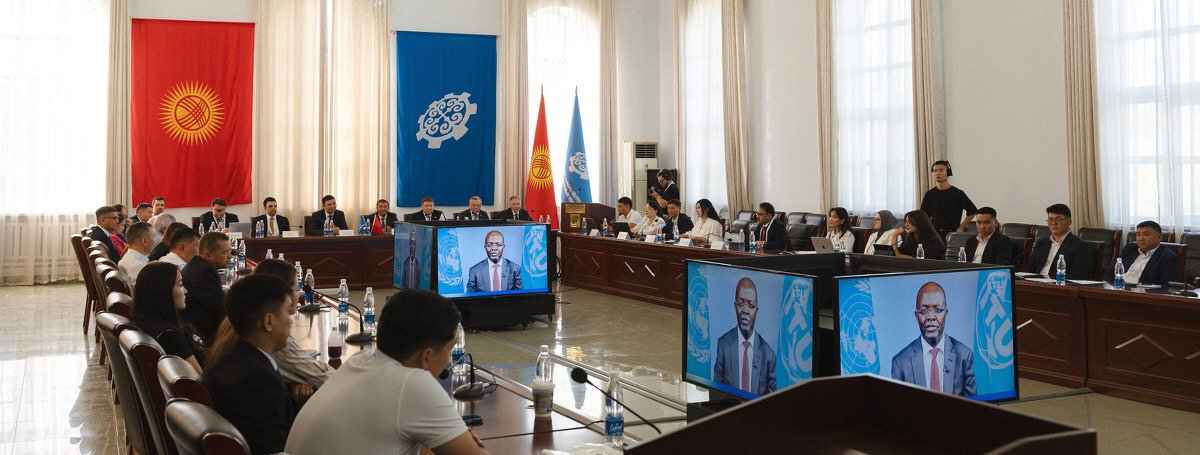
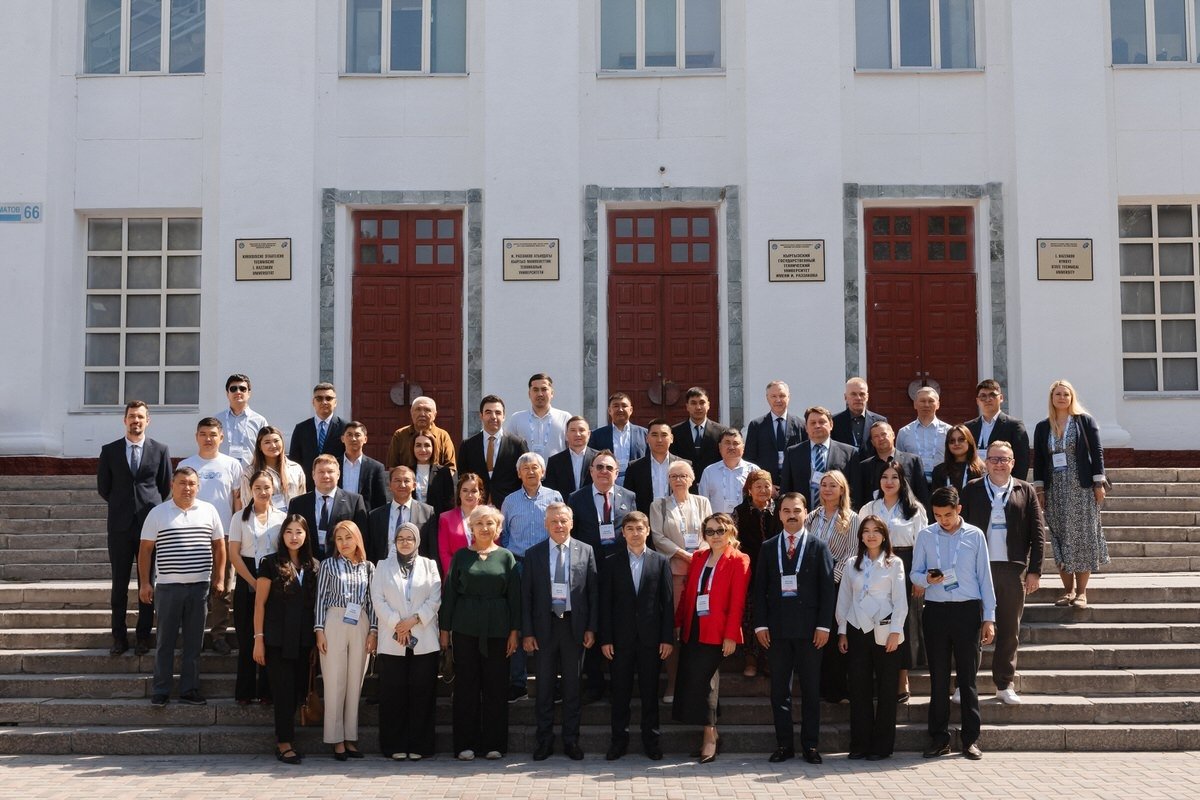
The relevance of the event stems from the growing role of satellite technologies in ensuring global communication and universal connectivity, which has led to an increased demand for highly qualified employees in this rapidly evolving sector. The organisation of the training seminar on satellite communications in Bishkek became possible after signing a cooperation agreement on building industry capacity and digital skills between Intersputnik and the International Telecommunication Union (ITU) in November 2025 at the World Telecommunication Development Conference (WTDC-25).
At the opening of the seminar, welcoming remarks were made by Mr. Mirlan Chynybaev, Chancellor of the I. Razzakov Kyrgyz State Technical University; Mr. Altynbek Toktorbaev, Chairman of the Communications Regulation and Supervision Service under the Ministry of Digital Development and Innovative Technologies of the Kyrgyz Republic and Chairman of the Intersputnik Board; Ms. Ksenia Drozdova, Director General of Intersputnik; and Dr. Cosmas Luckyson Zavazava, Director of the ITU Telecommunication Development Bureau.
The first session of the seminar focused on the legal framework for satellite communications regulation, licensing and spectrum management. It was moderated by Andrey Kirillovich, Director for Strategy, Marketing and Business Development at Intersputnik. The session addressed international cooperation on capacity building in satellite technologies, preparations for the 2027 World Radiocommunication Conference, national frequency assignment issues and regulatory specifics of maritime and aeronautical satellite communications.
Besides Andrey Kirillovich, the session featured presentations by Viktor Strelets, Chairman of ITU Radiocommunication Sector (ITU-R) Study Group 4 (SG 4); Alexander Klyucharev, Senior Radiocommunication Engineer in the Space Services Department of the ITU Radiocommunication Bureau; Vladislav Beregovsky, Radiocommunication Engineer in the Space Services Department of the ITU Radiocommunication Bureau; and Andrey Kushev, Technical Expert from the Terrestrial Services Department of the ITU Radiocommunication Bureau.
The second session of the seminar was dedicated to the theory and practice of electromagnetic compatibility in satellite systems. Presentations were given on protecting geostationary networks from potential interference caused by non-geostationary systems, the electromagnetic compatibility of IoT devices, spectrum analysis, inter-system interference and spectrum management challenges for developing countries. Speakers at the session included Valery Tikhvinsky, Visiting Professor at the International Information Technology University (IITU, Almaty); Viktor Strelets, Chairman of ITU-R Study Group 4; Dias Asanov, Lead Expert at the Radio Frequency Spectrum Division of the Radiocommunication Department, Communications Regulation and Supervision Service under the Ministry of Digital Development and Innovation Technologies of the Kyrgyz Republic; and Aftab Naghizada, Lead Regulatory Expert at the Space Agency of the Republic of Azerbaijan (Azercosmos).
The sessions on the second day focused on modern satellite communication technologies, particularly their use for connecting the unconnected. Leading officials from the communications administrations and regulatory bodies of the Central Asia region countries shared their experiences with the attendees: Tilek Taalaibekov, Head of the Radiocommunications Department at the Communications Regulation and Supervision Service under the Ministry of Digital Development and Innovative Technologies of the Kyrgyz Republic; Sandugash Khalelova, Chief Expert of the Communications Licensing Department at the Telecommunications Committee of the Ministry of Artificial Intelligence and Digital Development of the Republic of Kazakhstan; Aftab Naghizada, Lead Regulatory Expert at Azercosmos; Makhmadi Ismoilov, Deputy Director of the Centre for Digital Development and Satellite Communications of the Republic of Tajikistan; and Igor Shchetko, Project Coordinator at the ITU Telecommunication Development Bureau.
At the conclusion of the two-day seminar, a round-table discussion was held on the implementation of satellite communication technologies in the countries of the region.
The event was attended by representatives of government bodies responsible for ICT development, regulators, satellite operators, companies and organisations utilising satellite technologies, as well as academic and research institutions.
“Seminar attendees gained a significant amount of up-to-date knowledge and skills necessary for the effective use of satellite technologies to bridge the digital divide. The dialogue and exchange of experience among experts enable regional cooperation to reach a new level and become a significant factor in establishing an appropriate national regulatory framework and implementing joint international projects,” stated Intersputnik Director General Ksenia Drozdova. “As part of implementing the signed cooperation agreement, Intersputnik and ITU will continue to combine their efforts and expertise to train qualified personnel for the benefit of their member countries.”
Dr. Cosmas Luckyson Zavazava, Director of the ITU Telecommunication Development Bureau, mentioned that the seminar organized by ITU and Intersputnik is an important milestone in the implementation of the joint project on capacity building in satellite communications.
"This seminar has indeed reinforced the need, importance and value of regional cooperation. CIS region countries share spectrum resources and many common connectivity challenges. For that reason, close coordination on the use of radio-frequency spectrum and orbital resources is essential, requiring strong cooperation between administrations, international organisations and industry. Such cooperation will lead to better use of available resources and create conditions for further expansion of connectivity", he added.
For information:
In 2025, Intersputnik, with the participation of ITU, organized two regional events on the development of satellite technologies in the countries of the Caspian region and Central Asia. In February, the seminar “Space Activities in Modern Realities: Opportunities, Novelty and Prospects” was held in Almaty, Kazakhstan, in collaboration with the Telecommunications Committee of the Ministry of Digital Development, Innovation and Aerospace Industry of the Republic of Kazakhstan (now the Ministry of Artificial Intelligence and Digital Development of the Republic of Kazakhstan). In September, the industry capacity-building seminar “Orbital Synergy: Global Perspectives on Space Connectivity” was organized with the support of the Space Agency of the Republic of Azerbaijan (Azercosmos).