
Mobile World Congress (MWC) Barcelona 2026
23.04.2026
- The Internet is becoming global, “dead zones” are disappearing due to satellite connections, and NTNs (Non Terrain Networks) are actively developing.
- Artificial intelligence is becoming the centre of everything, it is undergoing a transformation from generative models to AI agents and physical AI.
- In the field of information security, a trend is emerging towards increasing sovereignty in Europe and reducing dependence on American and Chinese technologies.
- Devices are changing, they are becoming foldable, modular, and all of them are incorporating AI agents and the ability to connect to satellites.
- There is growing interest in quantum technologies that are emerging from laboratories and becoming commercially attractive.
- 4YFN (4 Years From Now) is a global initiative that shows interest in startups under the auspices of large companies or as representatives from countries around the world.
Information Security
Security has ceased to be an add-on and has become the foundation of modern telecommunications. The use of artificial intelligence to detect threats in real time has been actively implemented at all levels of information security equipment for several years now.
At sessions during the MWC, theses were repeatedly voiced about the need to increase sovereignty at the level of Europe and individual countries. European companies believe it is necessary to develop their own standards and scale them up to the global level, building data centres and communications networks that are independent of American and Chinese technologies. It was also noted that infrastructure deployment is often hampered by bureaucratic restrictions and excessive regulation.
Quantum Technologies and the Role of Satellite Communications in Them
For a long time, it was believed that the development of quantum technologies was hampered by physical limitations and remained the domain of laboratory research. A similar situation occurred about 15 years ago with the development of artificial intelligence. It was then predicted that its development would be slow and that results would not be achieved before 2030. In reality, technological advances in AI training equipment have made it possible to significantly reduce this time frame.
Quantum technologies have become one of the key topics at MWC, moving beyond the lab and taking on commercial dimensions. In the near future, quantum computing and information security based on quantum technologies may become a new trend in the development of technological industries.
As IBM noted at MWC, while two years ago the industry predicted the commercial use of quantum computers would only be by 2035, now "that time has come”. IBM presented its Quantum System Two as a platform for achieving “quantum utility” and moving from experiments to real business problems. The system is already available to more than 600 customers worldwide, and the IBM Quantum Network designer ecosystem includes more than 300 organisations and 500,000 developers running real quantum circuits on this hardware.
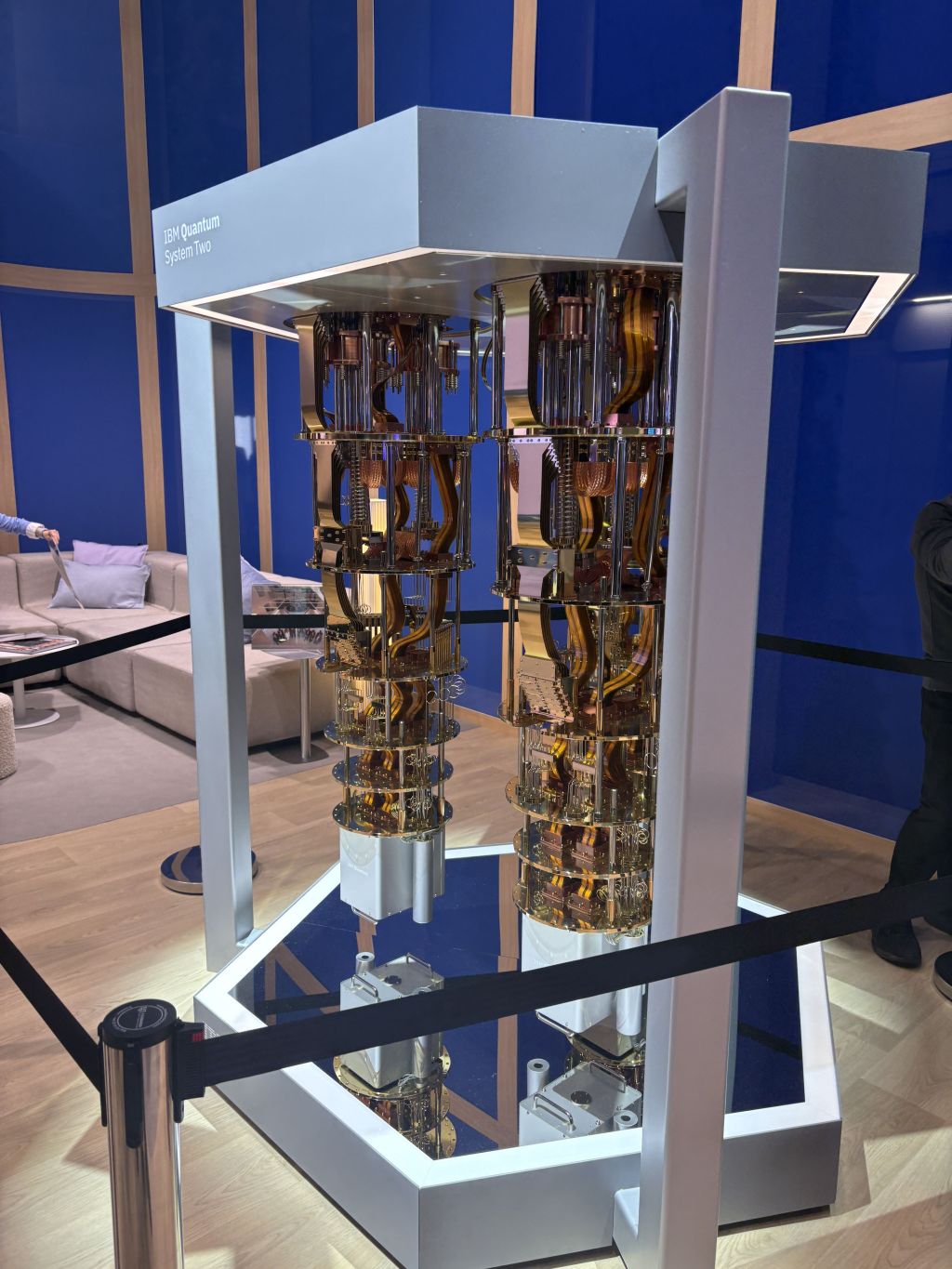
IBM Quantum System Two
Day Q is the day when quantum computers will be able to “hack” most of the cryptographic protection tools currently in use. Day Q is expected to occur after 2030, but European regulators are already calling for a transition to quantum-resistant cryptography.
The Global Quantum-Secure Network is a future communications infrastructure that uses the laws of quantum physics to ensure secure data transmission. Its key technology, quantum key distribution (QKD), allows two parties to create a secret encryption key in such a way that any attempt to intercept it will be immediately detected. Terrestrial quantum networks built on fibre optics have a strict range limitation of about 400–500 km. Beyond this limit, quantum signals (photons) fade and become unusable. Satellites overcome this limitation by transmitting photons through open space, where signal loss is much lower. This makes it possible to create quantum-protected channels between any point on the planet.
Orange and Toshiba have launched the first commercial Orange Quantum Defender network in France, protected against quantum threats. The key innovation is the combination of QDK and PQC running on Orange's existing commercial infrastructure. The network consists of Satellite QKD for long-distance key transfer and terrestrial QKD. This is one of the first practical steps towards a future global satellite-quantum network.
Given the increased interest in the technology, it makes sense to study it in more detail and evaluate its prospects, especially in terms of commercial use.
Artificial Intelligence: Entering the Physical World
The AI topic at MWC went beyond generative neural networks and AI agents. The main concept was Physical AI – artificial intelligence that receives a “body” and begins to interact with the material world. Physical AI combines perception (sensors, cameras, lidars), thinking (LLM and control models), and action (robotics, servos). Unlike hard-coded manipulators, physical AI possesses autonomy and adaptability, allowing it to operate in unstructured environments (kitchens, streets, emergency zones) and compensate for external influences. The main problems are the need to work in real time (milliseconds) and high risks of physical security in case of errors.
Mobile Devices, Hybrid Screens and New Form Factors
Vendors are paying a lot of attention to technologies that allow transformation of a device or a method of obtaining information.
TCL has introduced a hybrid technology that combines the eye protection (like electronic paper) with the brightness and smoothness of AMOLED. The technology is interesting for those who read a lot from a screen or use a tablet for notes and editing. The TCL NXTPAPER 70 Pro smartphone features a 6.9-inch 120Hz display with a dedicated colour/e-paper mode switch.
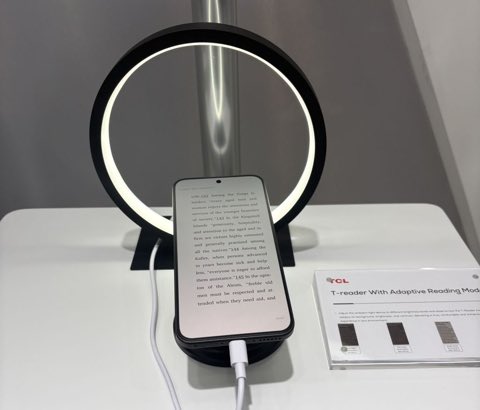
TCL NXTPAPER 70 Pro
Honor robot phone. Honor calls this device a "new kind" — it combines a robotic "body" (a camera on a moving gimbal) and AI intelligence, which opens up unusual scenarios. It is a personal videographer and movie camera, a living AI companion and assistant.
The Lenovo ThinkBook Modular AI PC's key innovation is the ability to physically swap out laptop components using the MagicBay magnetic connectors. The keyboard can be detached and replaced with a second 14-inch screen, turning the device into a powerful dual-screen workstation. The total visible area reaches approximately 19 inches. The detached keyboard continues to work via Bluetooth. The second screen can be attached to the outside of the laptop lid. This is convenient for demonstrating presentations to your interlocutor or for interacting with the device when it is closed. The laptop's side ports are also designed as modules. Depending on the task, the user can instantly replace, e.g., USB-C with a full-size HDMI or USB-A, which eliminates the need to use adapters.
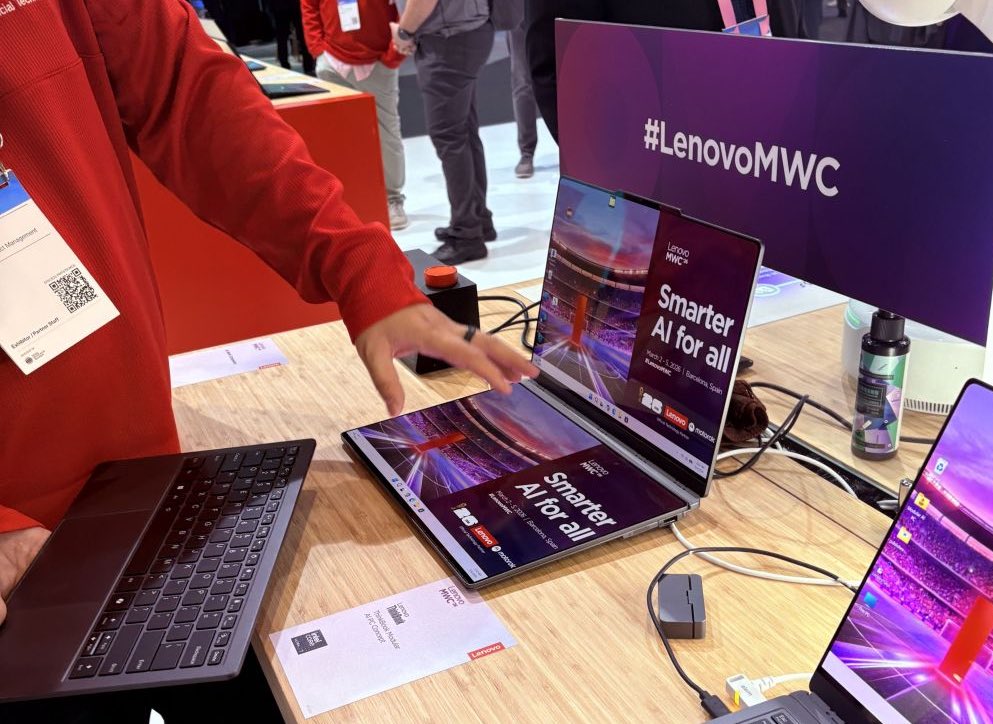
Lenovo ThinkBook Modular AI PC
4YFN (4 Years From Now)
The 4YFN platform brought together more than 1,000 startups from 100 countries, as well as more than 900 investors. Its name reflects its goal – to showcase technologies that could become mainstream in the next four years. The 2026 topic is Infinite AI. Many projects and discussions have focused on artificial intelligence, its role in industry, security, and everyday life. The 4YFN Awards were presented at MWC. In 2026, finalists were selected in five categories: Health Tech, Fintech, Climate Tech, Mobile Frontiers and Digital Horizons. In the Open Innovation Challenge, major corporations (Sony, LG, Fujitsu, CGI, Roca, Fluidra) sought technological solutions from participants from all over the world.
The 4YFN halls were filled with young people presenting their projects at their own small stands, which are associated with large companies or countries. To present their projects to investors, specialists have the opportunity to hold presentations in separate rooms. The platform can be of interest from the perspective of presenting startups from Intersputnik member countries in the field of satellite communications or as an opportunity for young employees to showcase their projects.
Conclusion
The industry is moving from the era of “just connecting” to the era of intelligent, resilient and secure infrastructure. Quantum technologies and physical AI have ceased to be an abstract future, becoming practical commercial products, and satellite communications have become an integral part of the mass 5G/6G ecosystem. Security, once an extra option, is now embedded into the foundation of network and device architecture. High interest in startups helps the industry to find new horizons for development.